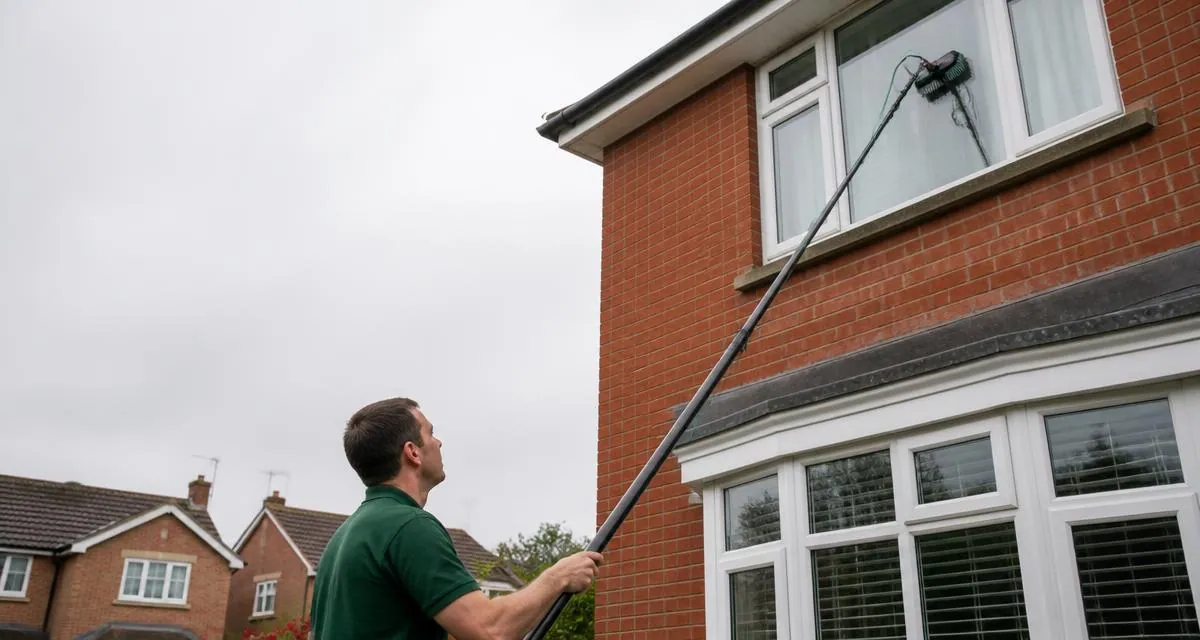
How to Get More Window Cleaning Work in Winter (and Be Ready for the Spring Rush)
Winter is quieter, but it doesn't have to be empty. Here's how to fill the short days with the work that suits the season, and use the slack to set up a spring that books itself.
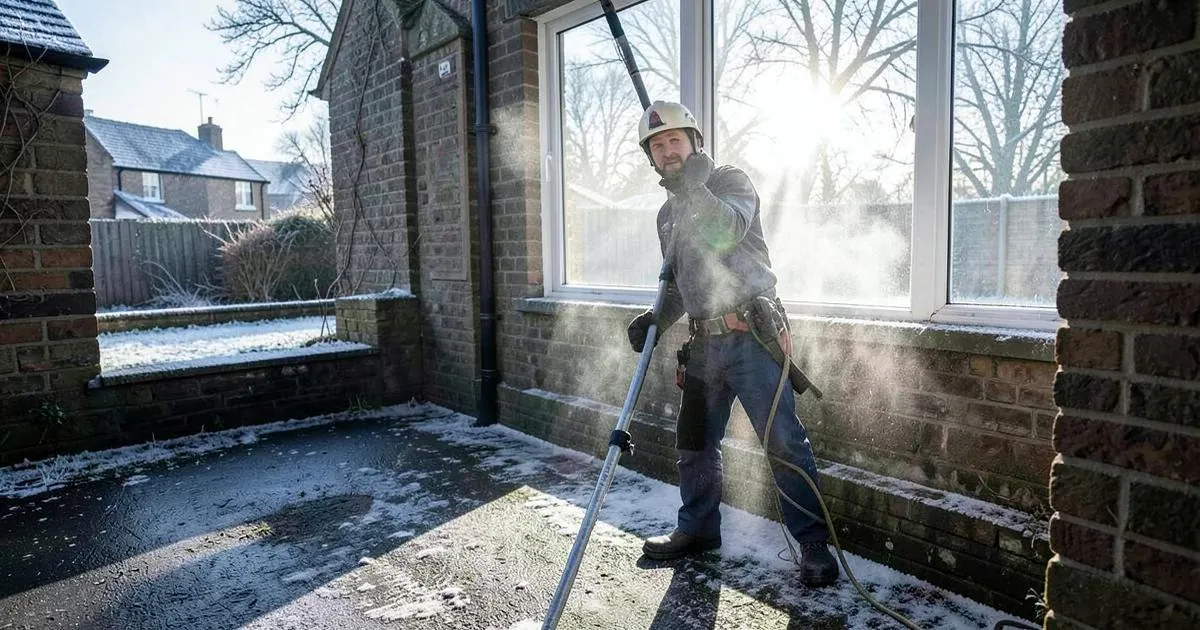
Every window cleaner knows the pattern. Short days, frost on the glass first thing, rain that cancels half a week, and customers who decide their windows can wait until spring. Then March arrives and everyone wants a clean at once. The cleaners who come through winter in good shape aren't the ones who work hardest in January; they're the ones who change what they sell in winter and use the quieter weeks to get ready for the rush.
This guide is about the work side of that: where winter jobs come from, and how to set yourself up so spring fills itself. For the practical side of working in the cold (frozen water, safety, kit), see our guide to window cleaning in winter.
Sell the work winter is actually good for
Winter is a bad season to sell a sparkling exterior clean that the next storm undoes. It's a good season for the jobs homeowners notice because of the weather. Lead with those.
Gutters and fascias
Once the leaves are down, gutters block, overflow and stain walls, and homeowners see it every time it rains. That makes late autumn and winter the natural season for gutter clearing, with fascia and soffit cleaning as an easy add-on while you're at height anyway. If you haven't priced these properly yet, start with gutter cleaning prices and fascia and soffit cleaning prices.
Inside windows
Inside cleans are weatherproof. On a day too wet or icy for outside work you can still earn, and in winter people are indoors looking at their windows with low sun shining through every smear. Offer inside windows to your regular customers as a once-a-season extra; some will book it before Christmas when they have guests coming.
Conservatory roofs
Autumn leaves, moss and green algae build up on conservatory roofs, and owners notice when the room goes dim. A roof clean is a bigger ticket than a window clean and it's a one-off job that doesn't depend on a tidy weekly round. Our guide to conservatory roof cleaning cost covers how to price it.
There are more ideas in add-on services that increase window cleaning revenue. The point isn't to do everything; it's to pick two or three winter services you can do well and make sure every customer knows you offer them.
Tell your existing customers first
The cheapest winter work is from people who already pay you. A short message to your round (a note through the door, a text, or a line on your invoice) saying you're booking gutter clears and inside cleans this winter will usually do more than any advert. Keep it specific: what the job is, roughly what it costs for a house like theirs, and how to book. Only message people you have a relationship with and who haven't asked you not to.
Pre-book the spring rush now
The spring rush is predictable, so treat it like a booking window rather than a surprise. In winter, ask lapsed and occasional customers whether they want to be first on the list when the weather turns. Put the confirmed ones in your diary by street, not by the order they replied, so your first spring rounds are already tight.
- Go back through last year's one-off and lapsed customers and offer them a spring slot.
- Ask regular customers whether they'd like an extra spring clean on top of their usual frequency.
- Give anyone who gets a quote in winter a simple way to book a date in March or April, rather than "get back to me in the spring".
- Keep a short waiting list for streets where you want more work, so you can fill gaps as soon as the season starts.
For keeping cash coming in across the whole year, not just spring, see how to keep window cleaning income steady through the year.
Use the quiet weeks to tighten your round
Winter is the best time to look hard at where your customers are. Every job that sits on its own, miles from the rest, costs you driving time all year. Use the slack to work out which streets you want more of, canvass those streets, and think about whether the isolated jobs are worth keeping at their current price. We go into the numbers in round density and window cleaning profit.
Quote extras instantly, not "I'll come and have a look"
In winter the enquiries that do come in are often for extras: "how much to clear the gutters?", "do you do conservatory roofs?". If your answer is to come round and look, you're adding a trip on a short day and giving the customer time to ask someone else. Decide your prices for each extra in advance (per property type, per metre or per side, whatever suits how you work) and you can answer straight away.
This is the job Squeegify is built for. A customer types their address on your website, it estimates the property and counts the windows from map photos, and prices the clean with your own price list, including extras like gutters, fascias, conservatory roofs and inside windows. The customer sees a total straight away and you get the lead with the price on it. You can try it on a real address in the demo.
Follow up the quotes that went quiet
Plenty of winter enquiries end with "thanks, I'll think about it". Those aren't lost; they're just waiting for a reason to book. A polite follow-up a few days later, and another as spring approaches, turns a good share of them into jobs. The tone matters: helpful, short, no pressure. Our guide on following up quotes without chasing has wording you can use. If you'd rather not remember to do it, Squeegify can send follow-ups for you.
Set it up while it's quiet
Whatever system you use for quoting and bookings, winter is the time to set it up. You have the evenings to get your prices right, test the flow on your own house and fix anything that doesn't feel right. In spring you won't have the time, and every enquiry you can't answer quickly is a job for someone else. Have a look at pricing when you're ready.
20% off any plan for 12 months with CHRISTMAS20 — see the offer.