Round Density: The Hidden Profit Lever for Window Cleaning Businesses
Two cleaners with the same number of jobs can earn wildly different amounts. The difference is usually density: how tightly packed the round is. Here's how to build it on purpose.
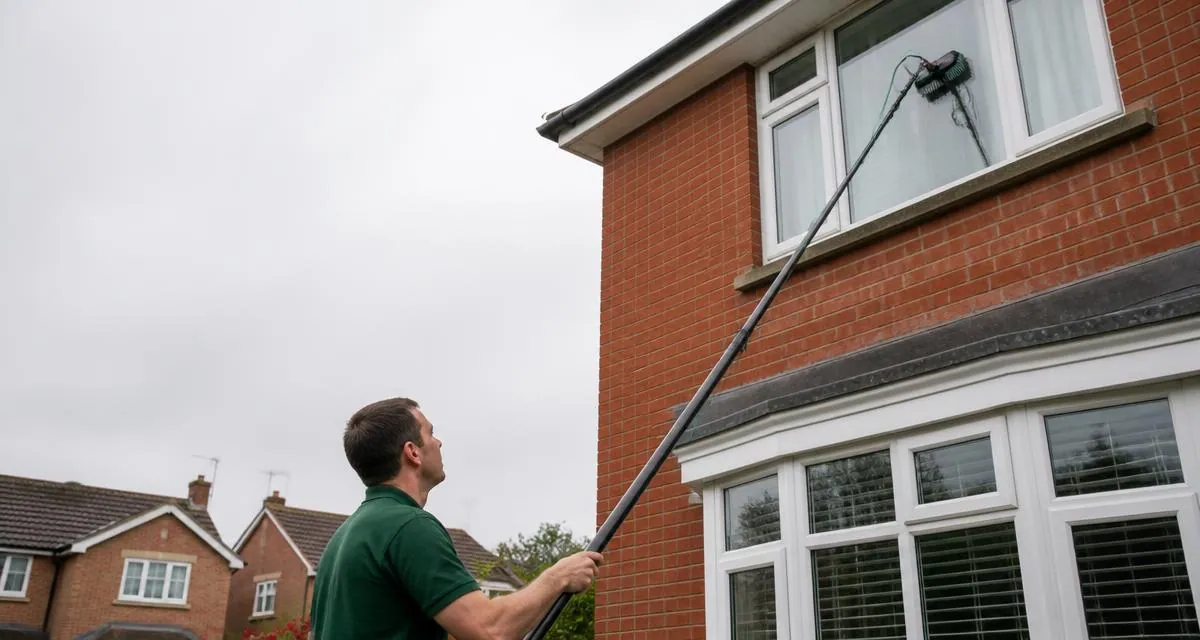
Imagine two window cleaners. Both have 200 regular customers at the same prices. One earns comfortably more than the other and finishes earlier. The difference isn't skill or pricing; it's geography. One cleaner's customers are clustered street by street; the other's are scattered across the whole town. The scattered round spends half its day driving. Density, how close your jobs are to each other, is one of the biggest and most overlooked levers in the whole business.
Why density beats volume
Every minute spent driving between jobs is a minute you can't bill. A tightly-packed round means more cleaning and less commuting in the same working day, which is the same thing as earning more per hour without raising a single price. It also cuts fuel, cuts wear on the van, and makes the day less tiring. A cleaner who can do twelve houses on one street will always beat one doing twelve houses across twelve streets, even if the second one is faster with a squeegee.
When your jobs are close together you can profitably charge less per window and still earn more per hour, or hold your price and simply pocket the saved driving time. Either way, density widens the gap between what a job costs you and what it earns.
How to measure your own density
You don't need software to get a rough read. Over a normal working week, notice how much of your day is spent cleaning versus driving. If you're spending more than a fraction of each day behind the wheel, your round is too spread out. A map of your customers tells the same story at a glance: healthy rounds look like clusters, struggling ones look like confetti.
Building density deliberately
Most rounds get sparse by accident: you take whatever work comes in, wherever it is. Density comes from being a little more deliberate about where you grow:
- Win the neighbours. When you book a house, canvass the nearest few: 'I'm doing number 12 on Tuesday, want yours while I'm on the street?' See canvassing that works.
- Target your marketing by area, not by town. Point ads and leaflets at the streets where you already have customers, so new work lands near existing work.
- Group loosely-placed customers onto the same day so your driving is at least batched, even before the round tightens up.
- Be willing to gently move or let go of a single far-flung customer who forces an hour-long detour; one outlier can wreck a whole day's efficiency.
The address is where density starts. If you can see, the moment an enquiry comes in, exactly where a new customer sits relative to your existing round, you can prioritise the ones that tighten it up. Address-based quoting makes that visible from the first click: see how to quote instantly from an address.
Density and recurring work reinforce each other
Density is most powerful on a regular round, where the same tight cluster gets cleaned again every few weeks. One-off jobs scattered across town are the opposite: maximum driving for a single payment. The more of your round is recurring and clustered, the more every drive pays off repeatedly. For the recurring side of the equation, see turning one-off cleans into recurring revenue and building a more profitable round.
Start with the next ten jobs
You can't reorganise 200 customers overnight, but you can decide where the next ten come from. Aim every new booking at a street you already serve, and within a season the round starts to tighten on its own. Density isn't a one-off project; it's a bias you apply to every growth decision.
If you want new enquiries to show you where they sit relative to your round from the first click, try the instant-quote demo or see how Squeegify fits your business.
Built for window cleaners
Put what you just read to work while you're out cleaning.
Squeegify turns the knowledge into a quote form on your own website, so visitors price themselves and drop into your inbox while you're on the ladder.