Window Cleaning Business Plan (UK Template, 2026)
You don't need 30 pages and a bank manager. You need six numbers that prove the round works. Here's the one-page plan that actually gets used.
Practical guides on quoting, pricing and running a window cleaning business, written and reviewed by the Squeegify team.
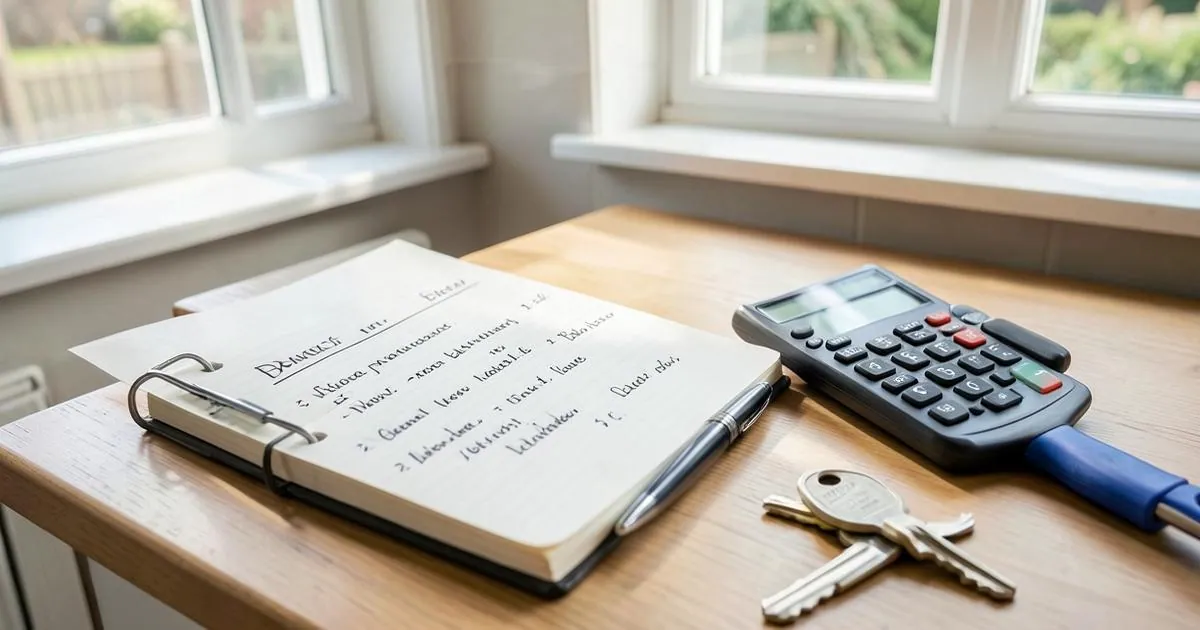
A workable window cleaning business plan fits on one page and answers six questions: what you charge, how many customers you need, how many you can clean a day, what it costs you to run the van, when you break even, and how you'll get the first 100 customers. Everything else is decoration.
1. Your price per clean
Set one base price for a standard 3-bed semi on a 4-weekly cycle, then adjust up for detached, three-storey, conservatories and awkward access. Typical UK market range in 2026 is £18-£30 per domestic visit, higher in London, the South East and Dublin.
2. How many customers you need
Work backwards from the income you want. If you want £3,500 a month turnover at £22 average on a 4-weekly cycle, you need roughly 160 regular customers. On an 8-weekly cycle you need double that. Write the number down. It turns 'get more work' into a target.
Monthly turnover = customers ÷ weeks in your cycle × 4 × average price. Change one input and you can see instantly whether price or volume is your bottleneck.
3. Houses per day
- Tight round, water-fed pole, no travel between streets: 20-35 houses a day is realistic.
- Scattered round across three towns: often under 15, and fuel eats the difference.
- Density is worth more than price at the start. Plan routes by postcode from day one.
4. Costs to budget
- Van: lease or buy, plus insurance, tax, MOT and servicing.
- Water system: RO/DI filtration, tank, pump, hose reel, poles and brushes.
- Public liability insurance, and employers' liability once you hire.
- Fuel, resin and consumables: the monthly running line.
- Marketing: website, Google Business Profile photos, leaflets or ads.
- Tax and National Insurance: set aside monthly, not annually.
5. Break-even
Add your fixed monthly costs, divide by your average price, and you have the number of cleans that keep the lights on. Most new one-van setups need somewhere between 50 and 90 cleans a month just to cover fixed costs. Everything after that is wages.
6. The first 90 days
- Weeks 1-2: kit, insurance, Google Business Profile, a one-page website with a way to get a price.
- Weeks 3-6: canvass one estate at a time and clean everything you win, even the cheap ones: density first.
- Weeks 7-12: raise the weakest prices, start asking for reviews after every clean, and set your cycle properly.
The line most plans miss
Response time. Homeowners usually ask two or three cleaners and book the first credible price they receive. If quoting happens in the evening after work, you lose jobs you had already won. A website that prices the job instantly (your rates, your rules) turns that gap into booked work while you're still on the round.
That is the job Squeegify does: instant quotes on your own site, so the plan on paper survives contact with real customers.
Put what you just read to work while you're out cleaning.
You came here to get better at the trade. Squeegify turns that knowledge into a quote form on your own website, so visitors price themselves, book a slot, and drop into your inbox while you're on the ladder. No more lost enquiries because you couldn't answer the phone.