How to Start a Window Cleaning Business in the UK (2026 Step-by-Step)
Low barriers to entry, recurring revenue and cash-flow that starts in week one. Here's the honest, ordered plan for starting a window cleaning business in the UK in 2026 — kit list, costs, paperwork and first customers.
Writes about pricing, business planning and growth for window cleaners.
You can start a window cleaning business in the UK for £500 with a trad kit and a car, or £3,000–£5,000 with a van-mounted water-fed pole system. Either way the sequence is the same: sort the paperwork, buy the kit, set your prices, then spend every spare hour getting customers. Most of the failures happen at the last step.
Step 1 — Register the business
- Register as a sole trader with HMRC (or form a limited company if you plan to employ quickly).
- Open a separate business bank account on day one — mixing accounts is the most common bookkeeping mistake.
- Note the VAT registration threshold and keep an eye on turnover; most one-van rounds stay under it for a while.
- Set aside tax from every payment as it arrives rather than at year end.
Step 2 — Get insured before the first job
Public liability cover of at least £1m, plus tools cover for your kit. If you're taking on any help, employers' liability is a legal requirement. Our window cleaning insurance guide covers what each policy actually pays for.
Step 3 — Buy the right kit (twice is expensive)
Starter trad kit (~£300–£600)
- Professional squeegee set and channels
- Applicators, scrim and microfibre cloths
- Buckets, detergent, scrapers
- Ladder plus stand-off, if you're going to use one (know the work-at-height rules first)
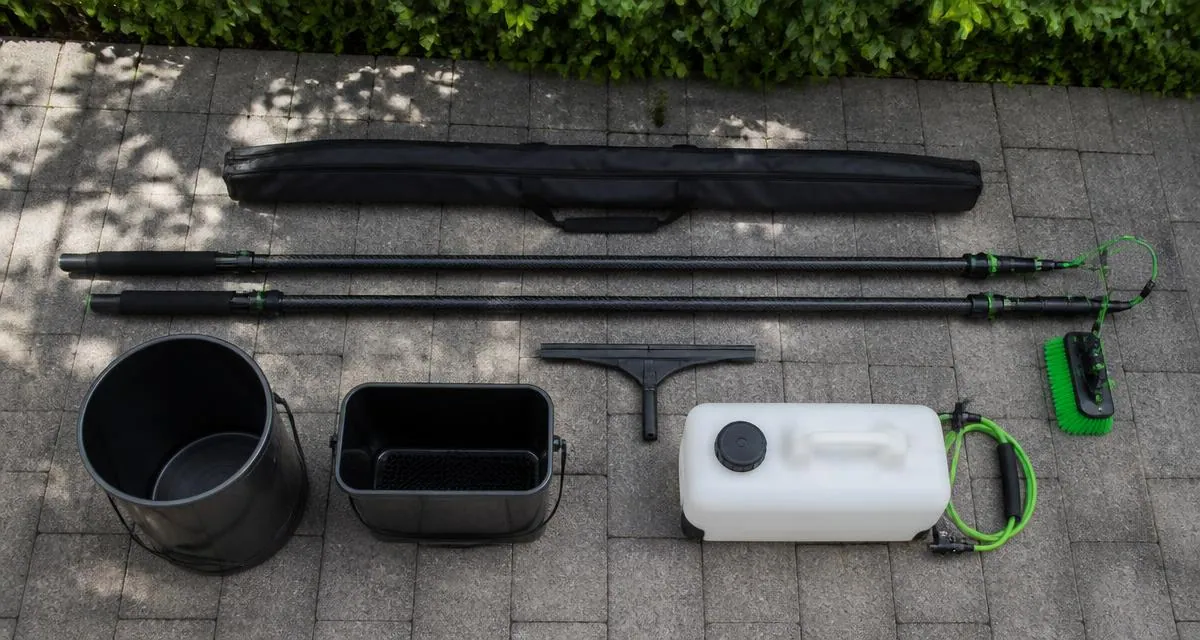
Water-fed pole setup (~£2,800–£5,000)
- 400–650L tank, pump and controller
- RO/DI water purification for producing pure water at home
- 18–25ft carbon pole and brush heads
- Hose reel and long hose
- Van, roof rack, and signwriting
Ground-based work is safer, faster on most houses, and increasingly what insurers prefer. Add a trad kit afterwards for interiors and shopfronts.
Step 4 — Set prices you can defend
Don't price by what the person before you charged. Set a base per-window rate, apply a multiplier for property type, add honest surcharges for access and extras, and publish a frequency ladder so the discount rewards the schedule you want. The full framework is in our UK pricing guide.
Step 5 — Get your first 50 customers
- Pick one estate and work it door to door — density beats reach, always.
- Set up a Google Business Profile the same week you start. It's free and it's the highest-intent traffic there is.
- Get a one-page website with an instant quote form, not a 'contact us' box.
- Leaflet the six houses either side of every job you book.
- Ask for a Google review after every single clean, by text, within 30 minutes of payment.
Step 6 — Systemise before you're busy
The habits that feel unnecessary at 20 customers are the ones that let you reach 300: every customer in a CRM with access notes and price, recurring schedules rather than memory, direct debit or card links rather than cash, and automatic follow-ups on quotes you haven't heard back on.
Realistic first-year numbers
A full-time solo round built steadily over twelve months commonly reaches £30k–£60k turnover, with the wide spread coming down to pricing discipline and how consistently you prospect. Costs are low — fuel, water, insurance, kit replacement and software — so margins are strong, but the round only compounds if customers stay. Reliability is the growth strategy.
The mistakes that cost the most
- Pricing to win every job — you end up busy and broke.
- No insurance for the first few months 'until it's worth it'.
- Keeping the round in your head instead of a system.
- Chasing one-off cleans instead of building recurring frequency.
- Letting quotes go unanswered — most lost work is never actually turned down, it's just never followed up.
Put what you just read to work while you're out cleaning.
You came here to get better at the trade. Squeegify turns that knowledge into a quote form on your own website — so visitors price themselves, book a slot, and drop into your inbox while you're on the ladder. No more lost enquiries because you couldn't answer the phone.