9 June 2026 · Robin Oruman
Window cleaning insurance UK · what cover you actually need in 2026
An operator-written guide to the insurance every UK window cleaner needs in 2026 · public liability, employer's liability, treatment risk, equipment cover · who to buy from, what it costs, and the three claim types you really should be ready for.
The single most important purchase a UK window cleaner makes in their first month of trading is public liability insurance. Not a pole. Not a vehicle. Not a marketing budget. The insurance · because the day something breaks, falls, or trips a customer is the day an uninsured operator's business ends.
This guide is the long version of what cover a working UK window-cleaning round actually needs in 2026, who sells it, what it costs, and the three claim types that come up often enough to matter. Written by an operator who pays for the cover, not an insurance broker selling it.
The four covers a residential window-cleaning round needs
Most UK window-cleaning insurance policies bundle these into a single annual premium. Buying them separately is more expensive and more paperwork; the named-trade policies from the four brokers I mention below handle the bundle automatically.
Public liability is the load-bearing cover. It pays out when your work damages a customer's property (smashed window, dropped pole through a roof tile, stripped paintwork from cleaning chemicals) or injures a third party (slipped on a wet path, tripped on your kit). The standard residential round needs £2 million of cover · this is what virtually every contract, both home customer and commercial site, will ask for. Some commercial contracts (schools, large estates, anything with a procurement team) require £5 million. A few specialist sites (gas terminals, anything with public-access risk like train stations) require £10 million. For a residential-only round, £2 million is enough.
Employer's liability is a legal requirement under the Employers' Liability (Compulsory Insurance) Act 1969 if you have any employees, including casual second-cleaners. The statutory minimum cover is £5 million. If you're solo and never employ anyone you don't need it; the moment you take on a second cleaner even for one day, you do. Fines for trading without it are £2,500 per day. Don't take the risk.
Treatment risk (sometimes called "good or product liability") pays out when the work you've done damages something later. Most common claim: window seal damage from chemical detergents you used in 2024 that the customer noticed in 2026. The standard public liability policy covers damage that happens AT the time of cleaning; treatment risk extends the cover to damage that surfaces later. Look for "products and treatment risk" or "completed operations" wording in the policy schedule. Without it, a customer's claim about your historical work is uninsured even if you have public liability.
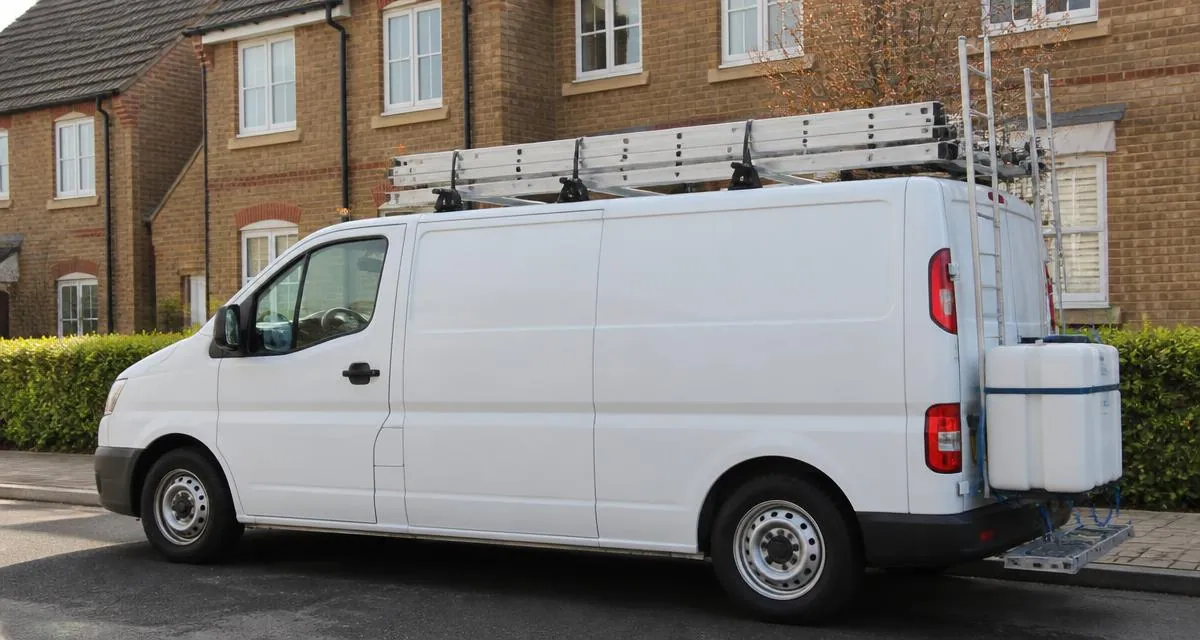
Equipment cover (sometimes "tools and equipment" or "goods in transit") pays out when your kit is stolen or damaged. A modern water-fed pole setup is £700 to £1,200 of kit; a van-mounted tank system is £1,500 to £3,000. Two break-ins worth of replacement is more than the lifetime cost of equipment cover. The standard residential round needs £2,000 to £3,500 of equipment cover; van operators with mounted tanks need £4,000 to £6,000. Make sure the policy covers theft from a locked vehicle overnight (not all do · check the wording).
What it costs in 2026
The cheapest legitimate policy for a one-person residential round with £2 million public liability and £2,500 equipment cover is around £280 to £380 a year in 2026. That's roughly £25 to £32 a month, included in the call-out cost of every visit when you average it across a small round.
A two-person round with employer's liability bumps to £420 to £560 a year.
A four-van fleet with multiple employees, larger equipment cover, and commercial contracts runs £900 to £1,400 a year.
Premiums have risen roughly 25% since 2022, driven by the broader UK insurance market plus a couple of high-profile water-fed-pole claims that affected the underwriting models. The smart move is to renew on a date that lets you compare three brokers each year · most operators pay 15 to 25% more than they need to because they auto-renew without shopping.
The four UK brokers most operators use
These are the trade-specific specialists that price competitively and don't ask you 40 questions about office computers (you don't have any). Listed alphabetically · I have no commercial relationship with any of them.
Constructaquote runs the British Window Cleaning Academy partnership scheme. Pricing is usually middle of the pack but the cover wording is genuinely written for window cleaners (not generic trades insurance). They include treatment risk on the basic policy without an upgrade, which is unusual.
Insure My Round is the smallest of the four and specialises specifically in window cleaners and gardeners. They quote fastest and renewal admin is the lightest. Pricing is competitive at the small-operator end (1-2 person rounds). They get more expensive at multi-van scale.
Simply Business is the largest by volume and the cheapest on entry-level cover. The trade-off is that their forms are generic and you'll spend more time clicking through "does your business involve gambling" type questions. The policy wording is solid · they're a Markel-backed underwriter under the hood.
Tradesman Saver sits between Simply Business and Constructaquote on price. Their selling point is the optional add-ons (tools cover, business interruption, legal expenses) packaged neatly. Tradesman Saver's claims handling has a reputation for being smoother than the cheaper brands · worth the extra £30-40 a year if you genuinely worry about claim friction.
All four sell online with instant cover. Get three quotes; the spread is usually £80 to £150 a year for identical cover.
The three claim types that actually come up
This is the section operators rarely see written down because the brokers don't want to scare new customers. The frequency numbers come from talking to working operators on the Federation of Window Cleaners forum and a few cleaner-specific Facebook groups; they're directionally honest but not statistically rigorous.
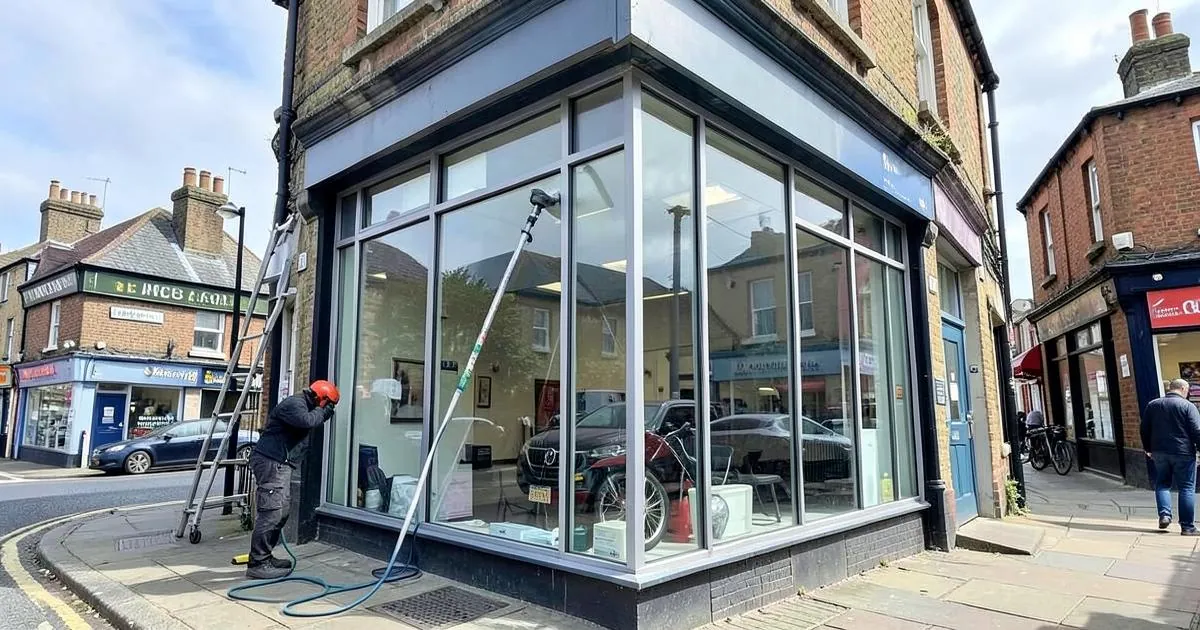
Smashed glass. The dominant residential claim type. Causes range from a water-fed pole brush head catching a frame edge on the upstroke, to a stone flicked up by a rinse bar, to a slipped ladder briefly resting against a single-glazed sash. Average claim size: £180 to £420 for replacement plus fitting on a standard double-glazed unit; £600 to £1,800 on a Victorian heritage sash or leaded light. Frequency: roughly one claim per 4,000 to 6,000 visits for an experienced operator (so a solo operator doing 100 visits a month sees one every three to five years). New operators see them faster. Insurance pays out reliably and quickly · this is the claim type your premium is calibrated against.
Property water damage. Less common but more expensive when it happens. A leaking pole connector, a hose burst inside the customer's hallway during inside cleaning, a tank overflow on the customer's drive that drained into a basement window-well. Average claim size: £450 to £1,800. Frequency: maybe one per 12,000 to 18,000 visits. Tracking your kit maintenance (inspect hoses monthly, replace connectors annually, drain tanks before frosty nights) is the prevention. Insurance pays out but expects you to show some pattern of maintenance · keep a simple log.
Personal injury (third party). The expensive one. Customer or passer-by slips on a wet path, falls off a step the cleaner left out, trips on a hose run across a driveway. Claim sizes start at £900 for minor sprains and run into five figures for any genuine fracture or back injury. Frequency: rare for a careful operator (one per 25,000+ visits), much higher for sloppy operators. The defence is to mark off your work area with two flexible cones or a single warning sign (the BWCA sells branded ones for £18), and to coil hose runs along edges rather than across pavements. Insurance pays out · this is exactly why you have £2 million of public liability.
Three claim types people worry about that almost never happen: (a) accidentally letting water into customer's electrical sockets (modern UK wiring is sealed; only happens if the operator is reckless), (b) damaging solar panels with a pressure rinse (water-fed poles run at far below pressure-washer pressures and don't damage panels), (c) being sued by a competitor (effectively zero risk for residential operators).
What to keep in your van
A printed copy of the certificate of insurance in the glove compartment. Customers occasionally ask to see it before letting you start, especially on commercial sites or on premium residential rounds where the homeowner is being careful. Half a page printed; takes a minute.
The broker's claims-line phone number stored in your phone. When something does happen, you call the broker first · before the customer's insurance, before tweeting about it, before texting your spouse. Delay on the broker call slows down the claim by weeks.
A pocket notebook for incident notes. If a window cracks, you photograph it, write down the date, time, weather, and what equipment you were using, and you tell the customer immediately. Three hours later when you're typing up the claim, your contemporaneous notes are what the insurer pays out on.
The mistake new operators make
Buying the cheapest policy in the first year, then auto-renewing it for five years without comparing. The brokers count on this · their pricing tends to ratchet up 8 to 15% on auto-renewal each year, which over five years can mean you're paying 50% more than the market for the same cover. Set a calendar reminder six weeks before renewal each year to get three quotes. The half-hour it takes pays for itself many times over.
The other mistake is treating insurance as paperwork rather than working capital. A serious claim · the kind that genuinely needs £200,000+ to settle, like a third-party fracture that doesn't heal · is what stands between you and personal bankruptcy as a sole trader. The few hundred quid a year is buying your ability to keep working when the unexpected happens. Don't shave it.
What to try this week
If you're an operator who has been running uninsured, even for a short period, fix it today. Get a quote from Constructaquote, Simply Business, and one of the others. Buy the cheapest legitimate cover for £2 million public liability + £2,500 equipment + treatment risk. You can be insured within ninety minutes of starting the search.
If you're already insured but haven't compared in 18+ months, get a quote from one new broker. Most operators save £80 to £180 a year on the first shop-around.
If you want the operator-facing side of running your round (instant quoting on your website, lead inbox, calendar, recurring schedule tracking) the Squeegify demo gives you the customer-facing experience in ten seconds. Solo plan £14.99/mo (or £11.24 with the FOUNDER25 founder code, valid for the first 10 UK + Irish operators). 7-day free trial. Cancel any time from /dashboard/billing.
Related reading
How often should I have my windows cleaned? UK 2026 guide
An operator's honest take on UK window-cleaning frequency in 2026 · monthly vs bi-monthly vs quarterly, what actually changes between visits, regional weather effects, the £-per-visit maths, and how to decide what's right for your specific property.
How to price your UK window-cleaning round in 2026
The pricing framework working UK window-cleaning operators actually use in 2026 · base call-out plus per-window plus floor multiplier plus extras, with real ranges for each component, common pricing mistakes, and how to raise prices on an existing round without losing customers.
Window cleaning equipment for beginners · UK 2026 starter kit
An operator's honest kit list for starting a UK window-cleaning round in 2026 · what to buy first under £800, what to upgrade at 50 customers, what to skip entirely, the brands working operators actually use, and the equipment economics behind a profitable round.