Per-Window vs Property-Based Pricing for Window Cleaners
Charge per window or per property? Both are used across the UK & Ireland, and both can be right. Here's a straight comparison and how to pick the one that fits your round.
Writes about pricing, business planning and growth for window cleaners.
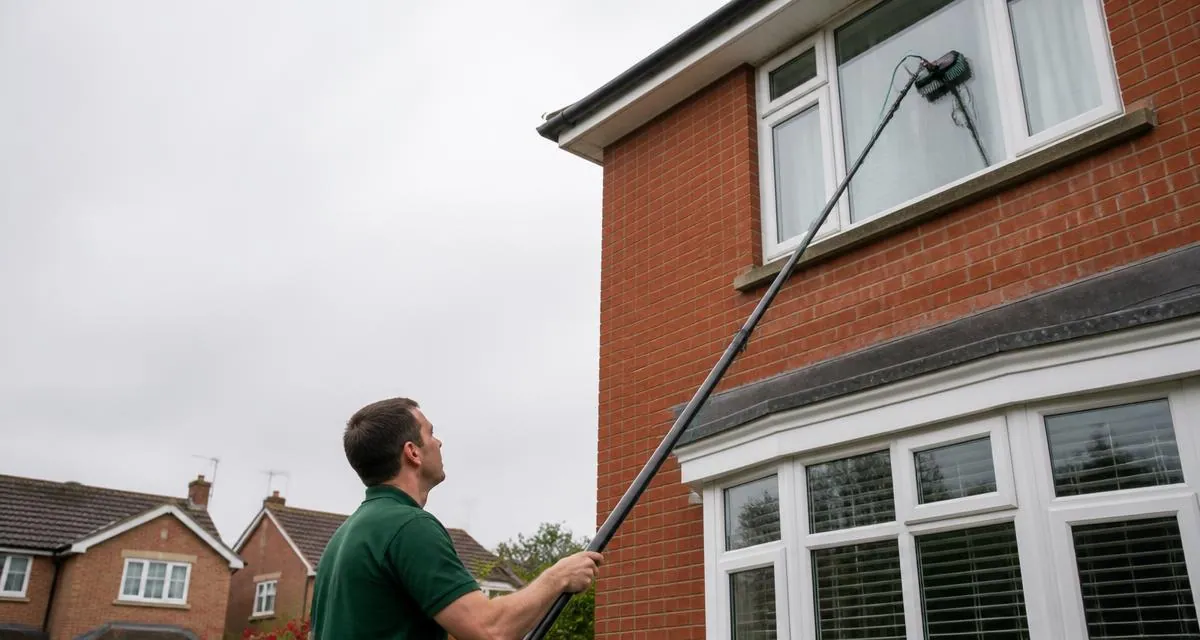
Ask ten window cleaners how they price and you'll get two broad answers: so much per window, or a flat price per property. Both are common across the UK and Ireland, and neither is "correct". What matters is which one lets you quote quickly, hit your hourly target, and not leave money on the table. Here's the honest comparison.
How per-window pricing works
You set a rate per window (or per pane), count the windows, and multiply — usually with a minimum charge so small jobs still pay. It feels precise and it's easy to justify to a customer who asks "why that price?".
The catch: a window is not a unit of work. A big ground-floor pane you can do in ten seconds counts the same as a fiddly Georgian sash up a ladder. Price purely per window and you'll underprice awkward houses and overprice simple ones.
How property-based pricing works
You price the whole job by property type and size — a flat figure for a 3-bed semi, more for a detached, less for a terrace — adjusted for access, frequency and extras. It maps far better to the real driver of your time: how long the house actually takes.
The catch: it relies on your judgement being right. Get your property bands wrong and you'll systematically under- or over-charge a whole category of house without realising.
Side-by-side
- Speed to quote: property-based is faster once your bands are set; per-window needs a count every time.
- Accuracy to effort: property-based tracks your actual time better; per-window rewards simple houses and punishes awkward ones.
- Customer clarity: per-window feels transparent; property-based feels like a clean, confident fixed price.
- Scaling: property bands are easier to teach a new cleaner than a per-window judgement call.
A very common approach: price by property type and size as the base, then treat window count as a sanity check and a way to flag the outliers. You get the speed of banded pricing with a guard against the genuinely unusual house.
Whichever you choose, protect your minimum
The fastest way to lose money with either method is a weak minimum charge. A £6 "two windows at the front" job still costs you a stop, a setup and the travel. Set a minimum that reflects the visit, not just the glass — the full logic is in how to price window cleaning jobs and the window cleaning prices guide.
Don't forget add-ons price differently
Whatever your core method, extras like gutters, fascias and conservatories usually price on a different basis again — often per-item or by property size rather than per window. If you bundle them in badly you'll lose the margin. There are dedicated guides for gutter cleaning prices, fascia and soffit prices and conservatory roof cleaning.
Which should you pick?
If you're new and still learning how long houses take, start per-window with a solid minimum — it stops you guessing wildly. As your round matures and you know your patch, move toward property-based bands for speed, keeping window count as your outlier check. Either way, the goal is the same: a price you can give fast, that hits your target hourly rate once travel and setup are counted.
A quote tool that supports both methods means you don't have to commit forever — you can price by property, per window, or a blend, and change your mind as the round grows. You can try pricing a job in the demo to see how it feels.
Put what you just read to work while you're out cleaning.
You came here to get better at the trade. Squeegify turns that knowledge into a quote form on your own website — so visitors price themselves, book a slot, and drop into your inbox while you're on the ladder. No more lost enquiries because you couldn't answer the phone.