How to Remove Hard Water Stains From Windows (What Pros Use)
Those white spots aren't dirt. They're mineral deposits bonded to the glass. Here's how professionals remove them without scratching anything.
Practical guides on quoting, pricing and running a window cleaning business, written and reviewed by the Squeegify team.
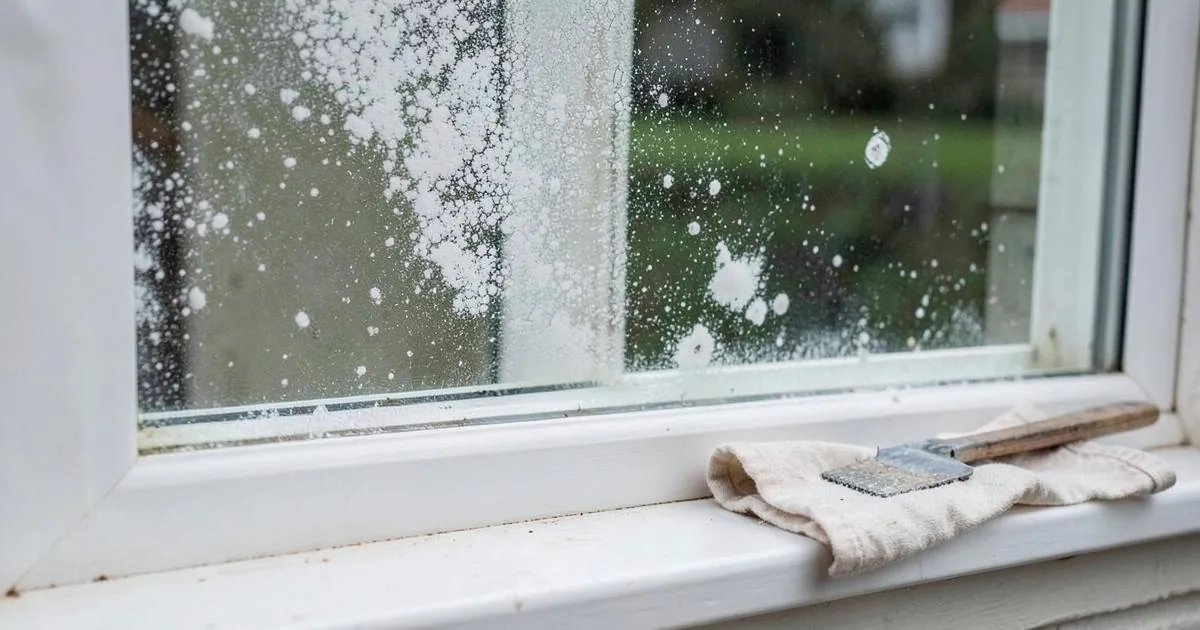
Hard water stains are mineral deposits, mostly calcium and magnesium, left behind when hard water dries on glass. Normal glass cleaner will not shift them, because they are bonded to the surface rather than sitting on it. They need a mild acid or a fine abrasive polish, followed by pure water rinsing to stop them returning.
The safe home method
- Wash the glass first with warm soapy water to remove loose dirt and grit.
- Soak a cloth in white vinegar (or a 50/50 vinegar and water mix), lay it flat on the stained area and leave it 10 to 15 minutes.
- Work the area gently with a non-scratch pad: no dry scrubbing, keep it wet throughout.
- Rinse thoroughly and squeegee dry so no new droplets are left to dry on the glass.
- Repeat once if the spotting is faint. Stop if it is not shifting: that is a job for a professional.
What professionals use
- A dedicated acid-based mineral remover, kept off frames, seals and brickwork.
- Cerium oxide glass polish for etched or long-standing deposits.
- A pure-water (deionised) rinse afterwards so the glass dries spot-free with no minerals left behind.
- A scraper on toughened flat glass only, wet, and never on coated or tempered panes.
Never use bathroom limescale spray, oven cleaner, wire wool or a dry blade on window glass. They strip coatings, mark frames and can leave permanent scratches that only replacement fixes.
When the glass is already etched
If deposits have sat for years, commonly under a leaking gutter or where a sprinkler hits the same pane, the minerals may have etched into the surface. Polishing can improve it, but the pane may never come back fully clear. An honest cleaner will tell you that before charging you for restoration.
Preventing it coming back
- Fix the source: a dripping gutter, an overflow, or a sprinkler hitting the glass.
- Get windows cleaned on a regular cycle so deposits never get the chance to bond.
- Ask your cleaner whether they use pure water: it dries without spotting in hard-water areas.
If you are looking for a regular clean, most professional cleaners can now give you a full price online in a couple of minutes without a doorstep visit.
Put what you just read to work while you're out cleaning.
You came here to get better at the trade. Squeegify turns that knowledge into a quote form on your own website, so visitors price themselves, book a slot, and drop into your inbox while you're on the ladder. No more lost enquiries because you couldn't answer the phone.